....
.
...
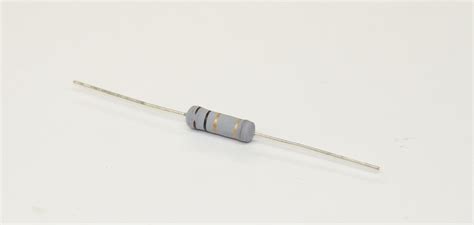
As comprehensively explored in our broader guide on January 4, 2026, which delves into what resistors are, their definitions, functions, symbols, and various technical aspects, resistors remain fundamental building blocks in electronics. This article will specifically focus on a particular variant: the 75 Ohm 2 Watt resistor, examining its precise characteristics and diverse applications.
What Defines a Resistor?
A resistor is a passive electrical component designed to oppose the flow of electric current, converting electrical energy into heat. Its primary characteristics are its resistance value, measured in Ohms (Ω), and its power dissipation rating, measured in Watts (W).
The resistance value dictates how much it will impede current flow, while the power rating indicates how much heat it can safely dissipate without damage. These two parameters are crucial for selecting the correct resistor for any given electronic circuit.
Decoding the 75 Ohm Value
The '75 Ohm' (75Ω) designation signifies the resistance value of this particular component. This value determines the voltage drop across the resistor for a given current, or the current flow for a given voltage, according to Ohm's Law (V = IR).
A 75 Ohm resistor will, for instance, limit the current from a 7.5 Volt supply to 0.1 Amperes (100 mA), assuming no other resistances in the circuit. This specific resistance value is commonly encountered in various analog and digital electronic designs.
The Crucial Role of 2 Watts Power Rating
The '2 Watt' (2W) rating indicates the maximum amount of power the resistor can safely dissipate as heat without being damaged. Exceeding this power limit will cause the resistor to overheat, potentially leading to its failure or even posing a fire hazard.
To calculate the power dissipated, you can use the formulas P = I²R (Power equals Current squared times Resistance) or P = V²/R (Power equals Voltage squared divided by Resistance). For a 75 Ohm 2 Watt resistor, the maximum current it can handle is approximately 0.163 Amperes (√P/R = √2/75), and the maximum voltage drop across it is about 12.25 Volts (√PR = √2*75).
It is always recommended to choose a resistor with a power rating significantly higher than the calculated maximum expected dissipation. This provides a safety margin, especially considering potential temperature fluctuations and component tolerances within a circuit.
Common Applications for 75 Ohm 2 Watt Resistors
A 75 Ohm 2 Watt resistor finds its utility in a broad spectrum of electronic applications due to its moderate resistance and robust power handling capability. One common application is in voltage divider circuits, where it helps reduce a higher voltage to a lower, usable level for other components.
Read Also: Cylinder Block Composition: Materials, Manufacturing, and Importance in Engines
They are also frequently employed in current limiting applications, ensuring that sensitive components like LEDs or integrated circuits receive a safe amount of current. In power supply sections, these resistors can be used for filtering, bleeding off residual charge, or acting as part of a load.
In audio and radio frequency (RF) circuits, 75 Ohm resistors are particularly valuable for impedance matching, especially with coaxial cables and other RF components that often have a characteristic impedance of 75 Ohms. This matching minimizes signal reflections and maximizes power transfer, which is critical for signal integrity.
Furthermore, they can serve as dummy loads for testing audio amplifiers or RF transmitters, safely dissipating power without emitting a signal. Their relatively high power rating makes them suitable for applications where significant energy needs to be converted into heat.
Choosing and Implementing Your Resistor
When selecting a 75 Ohm 2 Watt resistor, consider factors beyond just resistance and power, such as tolerance and temperature coefficient. Tolerance specifies the permissible deviation from the nominal resistance value, while the temperature coefficient indicates how much the resistance changes with temperature variations.
The physical size and construction type (e.g., carbon film, metal oxide film, wirewound) are also important, particularly for larger power ratings like 2 Watts, as they impact heat dissipation and mechanical strength. For 2W, often a larger form factor or specific material like wirewound is used to manage heat efficiently.
Safety and Best Practices
Proper heat management is paramount when working with 2 Watt resistors, as they generate considerable heat during operation. Ensure adequate ventilation around the component or consider using heat sinks if the resistor is operating near its maximum power rating.
Always double-check your circuit calculations to ensure the resistor's power rating is well above the actual power it will dissipate. Overlooking this crucial step can lead to premature component failure, circuit malfunction, or even dangerous thermal events.
In conclusion, the 75 Ohm 2 Watt resistor is a versatile and robust component essential in many electronic designs. Understanding its resistance value, power rating, and appropriate applications ensures reliable and safe circuit operation, making it an indispensable part of an electronics engineer's toolkit.
Frequently Asked Questions (FAQ)
What is the maximum current a 75 Ohm 2 Watt resistor can safely handle?
Using the power formula P = I²R, we can rearrange it to I = √(P/R). For a 2 Watt, 75 Ohm resistor, I = √(2W / 75Ω) ≈ 0.163 Amperes or 163 mA. This is the theoretical maximum current; it's always advisable to operate below this value for safety and longevity.
Can I use a 75 Ohm 1/4 Watt resistor in place of a 2 Watt one?
No, you generally cannot. While the resistance value (75 Ohms) would be the same, a 1/4 Watt resistor can only dissipate 0.25 Watts of power. If your circuit requires the resistor to dissipate more than 0.25 Watts (but up to 2 Watts), the 1/4 Watt resistor will overheat, burn out, and potentially damage other components.
In what typical circuits would a 75 Ohm 2 Watt resistor be commonly found?
This type of resistor is often found in power supply sections for voltage division or as a bleed resistor, in audio amplifiers for load or damping, and significantly in RF circuits for impedance matching, especially with 75 Ohm coaxial cables (like those used for cable TV or some video signals), or as attenuators and dummy loads.
How does temperature affect the performance of a 75 Ohm 2 Watt resistor?
Temperature can affect a resistor's performance in a few ways. Firstly, excessive heat can permanently damage the resistor or cause its resistance value to drift. Secondly, the resistor's actual resistance value can change slightly with temperature (known as the temperature coefficient), which might be critical in precision circuits. High temperatures also reduce the overall lifespan of the component.
Why is the wattage rating important for a resistor?
The wattage rating is crucial because it indicates the maximum amount of power a resistor can safely convert into heat without being destroyed. If a resistor is forced to dissipate more power than its rating, it will overheat, potentially burn out, emit smoke, or even start a fire, leading to circuit failure and safety hazards. It directly impacts the reliability and safety of the electronic circuit.
