....
.
...
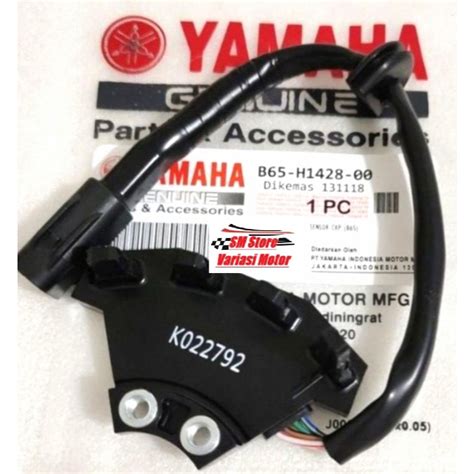
The crankshaft position sensor (CKP) is a vital component in the engine management system of your Yamaha NMAX. Its primary function is to monitor the position and rotational speed of the crankshaft. This information is crucial for the engine control unit (ECU) to determine the precise timing of fuel injection and spark ignition, ensuring optimal engine performance and efficiency.
Without the CKP sensor functioning correctly, your NMAX's engine would likely run poorly or not at all. The crankshaft is located within the engine block and held in place via main bearings which allow the crankshaft to rotate within the block. [4] The up-down motion of each piston is transferred through the connecting rod to the crankshaft, which then converts this linear motion into rotational motion.
The Role of the CKP Sensor in Engine Operation
The CKP sensor essentially acts as the 'eyes' of the ECU, providing real-time data on the crankshaft's movement. This data enables the ECU to precisely control the timing of fuel delivery and spark plugs. Accurate timing ensures complete combustion of the air-fuel mixture within the cylinders, which maximizes power output and fuel economy.
The information provided by the CKP sensor is used to synchronize the operation of several critical engine components. These components include the fuel injectors and the ignition coils. Furthermore, the ECU uses the CKP signal to calculate engine speed (RPM) which is displayed on your instrument panel.
How the Crankshaft Position Sensor Works
Most CKP sensors use a magnetic principle to detect the crankshaft's position. A toothed wheel or reluctor wheel is attached to the crankshaft. As the crankshaft rotates, the teeth on the wheel pass by the CKP sensor.
This process generates a series of pulses that the sensor sends to the ECU. The ECU interprets these pulses to determine the crankshaft's position and speed. This information is subsequently used to calculate other engine parameters, such as engine load and timing of the spark.
Identifying Potential CKP Sensor Issues in Your NMAX
Several symptoms can indicate a problem with the CKP sensor in your NMAX. These symptoms range from subtle to significant, potentially affecting your motorcycle's ability to run properly. It is important to diagnose any issues as soon as possible to avoid further engine damage.
Read Also: Supra X 125 Cylinder Block Guide: Everything You Need to Know
Common signs include engine misfires, rough idling, and difficulty starting the engine. If the sensor fails completely, the engine may not start at all. You might also observe a decrease in fuel efficiency or a warning light on your dashboard, indicating a problem.
Troubleshooting and Replacing the CKP Sensor
Diagnosing a faulty CKP sensor usually involves using a diagnostic scanner to read error codes. These codes can pinpoint whether the CKP sensor is the source of the problem. You might have to check the wiring and connectors associated with the sensor for corrosion or damage.
Replacing the CKP sensor often requires some mechanical skill and access to tools. Consult the service manual for your Yamaha NMAX for the correct procedure. Ensure you purchase a genuine or high-quality replacement sensor that is specifically designed for your model.
Maintenance Tips for Your NMAX's CKP Sensor
Regular maintenance can extend the lifespan of your CKP sensor. This maintenance includes visual inspection during scheduled servicing. Always keep the engine clean to reduce the likelihood of dirt or debris affecting the sensor.
Also, avoid using excessive force when cleaning or working around the sensor, as this could damage it. Following these simple steps will help ensure that your NMAX continues to run smoothly and efficiently.
Benefits of a Functioning CKP Sensor
A properly functioning CKP sensor contributes significantly to a smooth and reliable riding experience. It ensures that the engine performs optimally, delivering the power you need when you need it. This includes the efficient use of fuel and the extended lifespan of the engine.
By understanding the importance of the CKP sensor and how it works, you can better maintain your NMAX. You can identify potential problems before they become major issues. Proper maintenance will help to keep your Yamaha NMAX running smoothly for many miles to come.
Frequently Asked Questions (FAQ)
What happens if the CKP sensor fails?
If the CKP sensor fails, the engine may misfire, idle roughly, be difficult to start, or not start at all. The engine's performance will be significantly affected, and a warning light may appear on the dashboard.
How do I diagnose a faulty CKP sensor?
Diagnosing a faulty CKP sensor typically involves using a diagnostic scanner to read error codes related to the sensor. You should also visually inspect the sensor's wiring and connections for any damage or corrosion.
Where is the CKP sensor located on my NMAX?
The location of the CKP sensor can vary slightly depending on the specific NMAX model year. It is usually mounted near the crankshaft or on the engine block, often close to the flywheel or reluctor wheel.
Can I replace the CKP sensor myself?
Replacing the CKP sensor is possible with some mechanical aptitude and access to basic tools. Consult your NMAX's service manual for specific instructions. If you are not comfortable, seek professional assistance.
