....
.
...
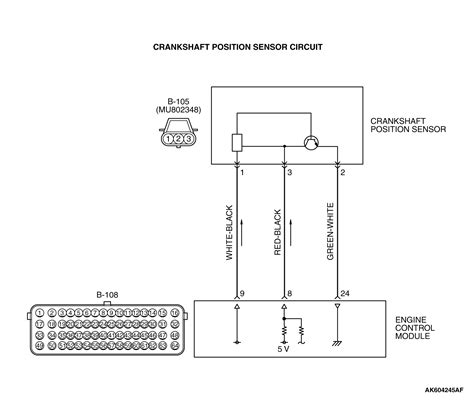
The crankshaft position sensor (CKP sensor) is a crucial component in your vehicle's engine management system. It provides vital information to the engine control unit (ECU) regarding the crankshaft's position and rotational speed. This data is essential for controlling fuel injection and ignition timing, ultimately ensuring efficient engine operation.
The crankshaft is located within the engine block and held in place via main bearings which allow the crankshaft to rotate within the block. The up-down motion of each piston is transferred through the connecting rod to the crankshaft, causing it to rotate. When the CKP sensor circuit has a problem, it can lead to various drivability issues.
The Role of the Crankshaft Position Sensor
The CKP sensor essentially acts as the engine's "eyes," providing real-time data on the crankshaft's rotation. This information allows the ECU to precisely time the fuel injectors and spark plugs. Without this critical data, the engine would likely fail to start or run very poorly.
There are typically two primary types of CKP sensors: inductive and Hall effect sensors. Inductive sensors generate an AC voltage as the reluctor wheel (often part of the crankshaft) passes by, while Hall effect sensors rely on a magnet and a semiconductor to create a digital signal.
Understanding "A Circuit"
When you see "A circuit" in a diagnostic code (like P0335: Crankshaft Position Sensor A Circuit Malfunction), it usually refers to the main circuit of the CKP sensor. This includes the sensor itself, the wiring harness, and the ECU. A fault in the "A circuit" indicates a problem with the sensor's ability to send a proper signal to the ECU.
The "A circuit" designation doesn't always specify the precise location of the issue. Therefore, you need to use diagnostic tools and visual inspection to isolate the specific component that has a fault.
Common Symptoms of a Faulty CKP Sensor A Circuit
Several symptoms can indicate a problem with the CKP sensor A circuit. These symptoms may present themselves individually or combined. The most frequent issues are engine stalling, especially when starting or idling.
Other symptoms include a rough idle, misfires, reduced engine power, and difficulty starting the engine. The "Check Engine" light will usually illuminate on the dashboard, and a diagnostic scan will reveal a trouble code related to the CKP sensor circuit.
Diagnostic Steps and Troubleshooting
Diagnosing a CKP sensor A circuit problem involves a methodical approach. First, connect a diagnostic scan tool and retrieve any stored trouble codes. Note the specific code (e.g., P0335) to guide your troubleshooting.
Read Also: Cylinder Block Function: The Heart of Your Engine's Operation Explained
Next, perform a visual inspection of the sensor and its wiring harness. Look for loose connections, damaged wires, or any signs of corrosion. The condition of the wiring is often the root of the problem.
Testing the Crankshaft Position Sensor
You can use a multimeter to test the CKP sensor. The method of testing varies slightly depending on the sensor type (inductive or Hall effect).
For an inductive sensor, measure the AC voltage output while cranking the engine. If the sensor is generating voltage, it's likely functioning correctly, and the issue might lie elsewhere in the circuit. For a Hall effect sensor, check for a consistent voltage signal from the power and ground circuits and see if the signal wire is toggling correctly during cranking.
Further Diagnosis and Repair
If the sensor tests okay, the next step is to examine the wiring harness and connectors. Check for continuity in the wiring from the sensor to the ECU using a multimeter. Repair or replace any damaged wiring.
If the wiring is fine, the ECU could be the problem. A faulty ECU is uncommon, but it is still a potential culprit, especially if other circuits in the ECU show issues. In some cases, a faulty reluctor wheel (also known as a tone wheel or trigger wheel) on the crankshaft can cause issues.
Repairing or Replacing the CKP Sensor
Replacing the CKP sensor is often a straightforward process. First, disconnect the negative battery terminal to prevent electrical shocks. Then, locate the sensor (refer to your vehicle's repair manual for its specific location).
Unplug the electrical connector, remove the mounting bolts, and carefully remove the old sensor. Install the new sensor, making sure it's properly aligned and secured. Reconnect the electrical connector and the battery terminal.
Conclusion
Understanding and diagnosing issues with the crankshaft position sensor A circuit is crucial for maintaining your vehicle's performance. By following these diagnostic steps and taking appropriate repairs, you can ensure your engine runs smoothly and efficiently. Do not hesitate to seek help from a professional mechanic if you are uncomfortable doing these procedures yourself.
Always refer to your vehicle's repair manual for specific instructions and safety precautions. Proper troubleshooting and repair are important to ensure the engine runs efficiently and prolongs the life of the engine.
Frequently Asked Questions (FAQ)
What is the most common symptom of a faulty crankshaft position sensor?
The most common symptom is the engine failing to start or stalling while running.
Can I drive my car with a faulty CKP sensor?
Driving with a faulty CKP sensor is generally not recommended as it can lead to engine damage and potentially leave you stranded. Repair it as soon as possible.
What tools are needed to diagnose a CKP sensor issue?
You'll need a diagnostic scan tool, a multimeter, and possibly a repair manual specific to your vehicle.
Is it possible to damage the CKP sensor during removal or installation?
Yes, it is possible. Be careful when removing the old and installing the new sensor and connector, and make sure that no foreign objects have become lodged in the hole during the process.
