....
.
...
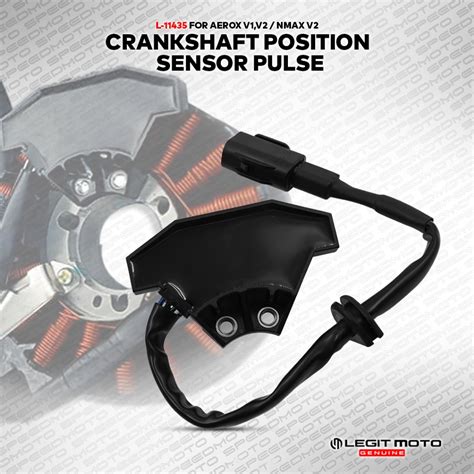
The crankshaft position sensor (CKP sensor) is a crucial component in your Honda Beat FI's engine management system. It plays a vital role in determining the engine's timing, allowing the engine to run efficiently and effectively. This sensor provides essential information to the Engine Control Unit (ECU), enabling it to manage fuel injection and ignition timing.
The crankshaft is located within the engine block and held in place via main bearings which allow the crankshaft to rotate within the block. [4] The up-down motion of each piston is transferred through the connecting rod to the crankshaft, transforming linear motion into rotational motion.
What is the Crankshaft Position Sensor?
The CKP sensor is a small, electronic device typically found near the crankshaft pulley or flywheel. Its primary function is to monitor the position and speed of the crankshaft. This information is then relayed to the ECU, which uses it to synchronize the spark plugs and fuel injectors.
Essentially, the CKP sensor acts as the brain's eyes and ears for the engine's timing. Without it, the engine cannot properly determine when to ignite the fuel-air mixture, leading to starting problems, poor performance, and even engine failure.
How Does the CKP Sensor Work?
Most CKP sensors use a magnetic principle to detect crankshaft position. They typically consist of a magnet, a pickup coil, and a reluctor wheel (or tone wheel) attached to the crankshaft. As the crankshaft rotates, the reluctor wheel passes through the sensor's magnetic field.
This movement creates a change in the magnetic flux, inducing a voltage signal in the pickup coil. The frequency and pattern of this signal are then interpreted by the ECU to determine the crankshaft's position and speed.
Common Symptoms of a Faulty CKP Sensor
A failing CKP sensor can manifest in several ways. One of the most common symptoms is difficulty starting the engine, especially when cold. You might also experience engine stalling, misfires, or a significant decrease in engine performance.
Other indicators include a check engine light illuminating on the dashboard and unusual engine noises. If you notice any of these issues, it is essential to have your Beat FI diagnosed by a qualified mechanic.
Read Also: Tension Control System And Features
Troubleshooting a Suspected CKP Sensor Issue
If you suspect your CKP sensor is faulty, a mechanic can perform several tests to diagnose the problem. The first step involves checking the sensor's electrical connections for corrosion or damage. A visual inspection can reveal obvious problems such as frayed wires or loose connectors.
Next, the mechanic may use a multimeter to check the sensor's resistance and output voltage. A scan tool can also be used to read diagnostic trouble codes (DTCs) related to the CKP sensor. These codes provide valuable clues about the nature of the problem.
Replacing the Crankshaft Position Sensor
Replacing the CKP sensor is a task that requires some mechanical knowledge and the right tools. Access to the sensor might require removing certain engine components such as the air filter box or covers.
The sensor is usually secured by one or two bolts, and carefully removing these bolts is the first step. After removing the old sensor, the new one can be installed in its place. Always consult your Beat FI's service manual for specific instructions and torque specifications for your model.
Importance of Regular Maintenance and Diagnosis
Regular maintenance, including checking and cleaning the CKP sensor's connections, can help prevent issues. Addressing any unusual engine behavior promptly can prevent further damage and costly repairs.
Ignoring symptoms of a faulty CKP sensor can lead to decreased fuel efficiency, engine damage, and even complete engine failure. Therefore, paying attention to your motorcycle's performance and promptly addressing any issues is crucial.
Conclusion: Keeping Your Beat FI Running Smoothly
The crankshaft position sensor plays a vital, but often overlooked, role in the efficient operation of your Honda Beat FI. Understanding its function and being able to recognize the symptoms of a failing sensor can save you time, money, and frustration. By performing regular maintenance and promptly addressing any problems, you can ensure your Beat FI continues to provide reliable and enjoyable performance for years to come.
